OpenAI launches Presence for enterprise voice and chat agents
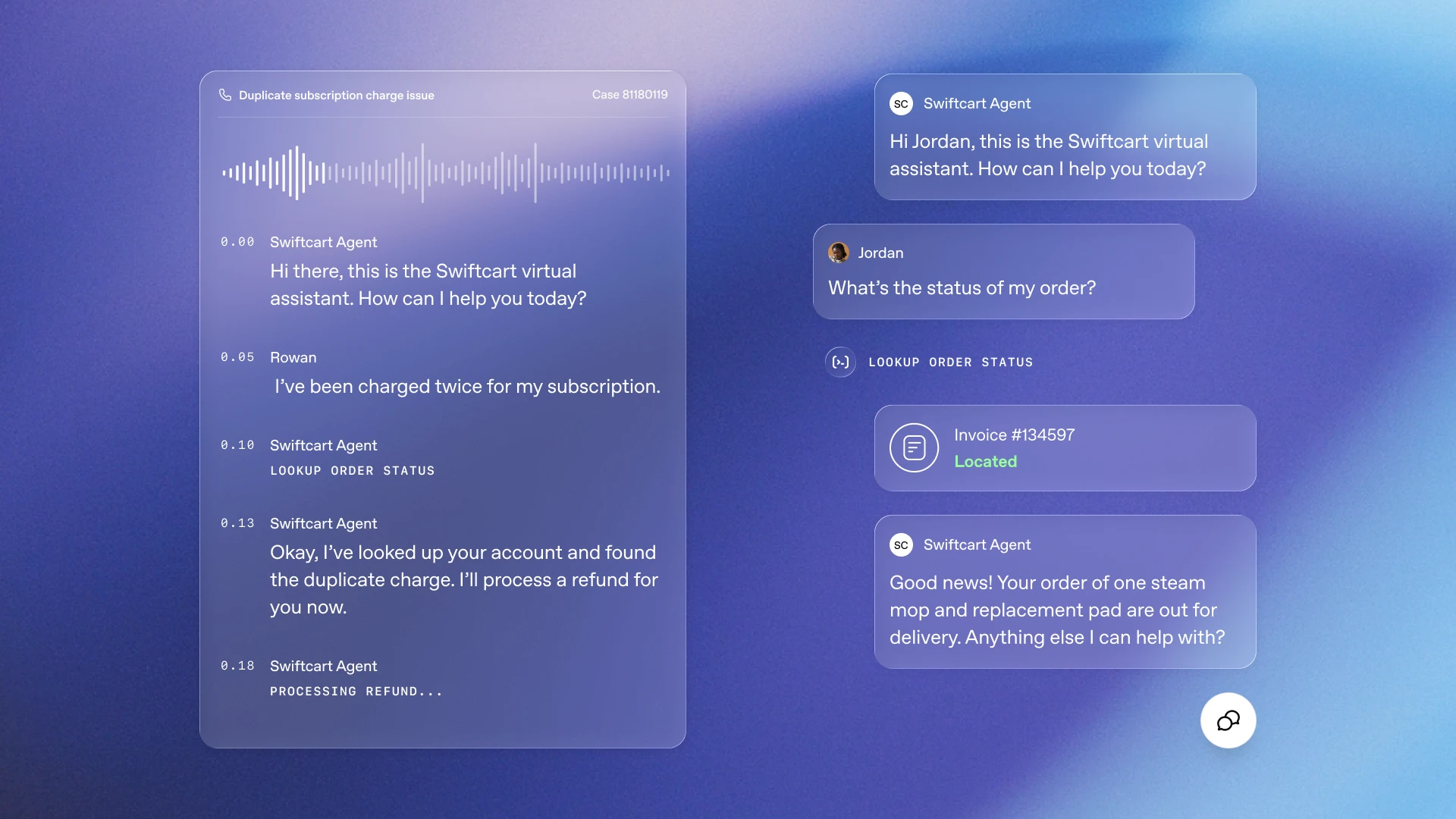
OpenAI has launched OpenAI Presence, a managed product for putting voice and chat agents into customer service and internal business workflows. Announced on July 22, Presence is designed for agents that can answer questions, use company systems, take approved actions and hand a conversation to a person when necessary. It is available now to eligible enterprise customers through a limited general-availability programme, but not as a self-service product.
Each deployment begins with a narrowly defined job, such as resolving billing problems, supporting insurance claims or handling employee IT requests. A company decides which information and systems the agent may access, which actions it can perform and when approval or human intervention is required. Presence combines those rules with simulations, evaluation tools, guardrails and monitoring. After launch, production conversations and escalations expose weaknesses. Codex can investigate those signals and propose changes, which teams test and approve before rollout.
OpenAI says it has already used the system on its own English-language telephone support line. According to the company, Presence now resolves 75 percent of incoming issues without human assistance, while a Codex-powered improvement cycle reduced handoffs by 15 percentage points in ten days. These are OpenAI’s own operational figures and have not been independently audited. BBVA is exploring voice support for banking customers in Mexico, SoftBank is testing Japanese conversations and Australian insurer IAG is examining support during severe weather and other periods of high demand.
The launch matters because enterprise competition is moving beyond model benchmarks. A capable model is only one part of a production agent; permissions, evaluations, integrations, monitoring and reliable escalation determine whether a company can safely let it act. Presence packages those controls with implementation help from OpenAI engineers and selected systems integrators. That makes it as much a deployment service as a software platform.
For businesses, the limited and hands-on rollout is a reminder that this is not a plug-and-play digital employee. Buyers still need clear ownership of policies, access controls, audit logs, data handling and human fallback. For users, well-designed agents could mean faster, always-available support and fewer transfers. The harder test is whether they remain accurate when requests are unusual, policies change or consequences are serious. Presence makes OpenAI’s direction clear: the next enterprise AI market will be judged less by impressive demonstrations and more by dependable work in real systems.