OpenAI rolls out Health in ChatGPT to U.S. adults
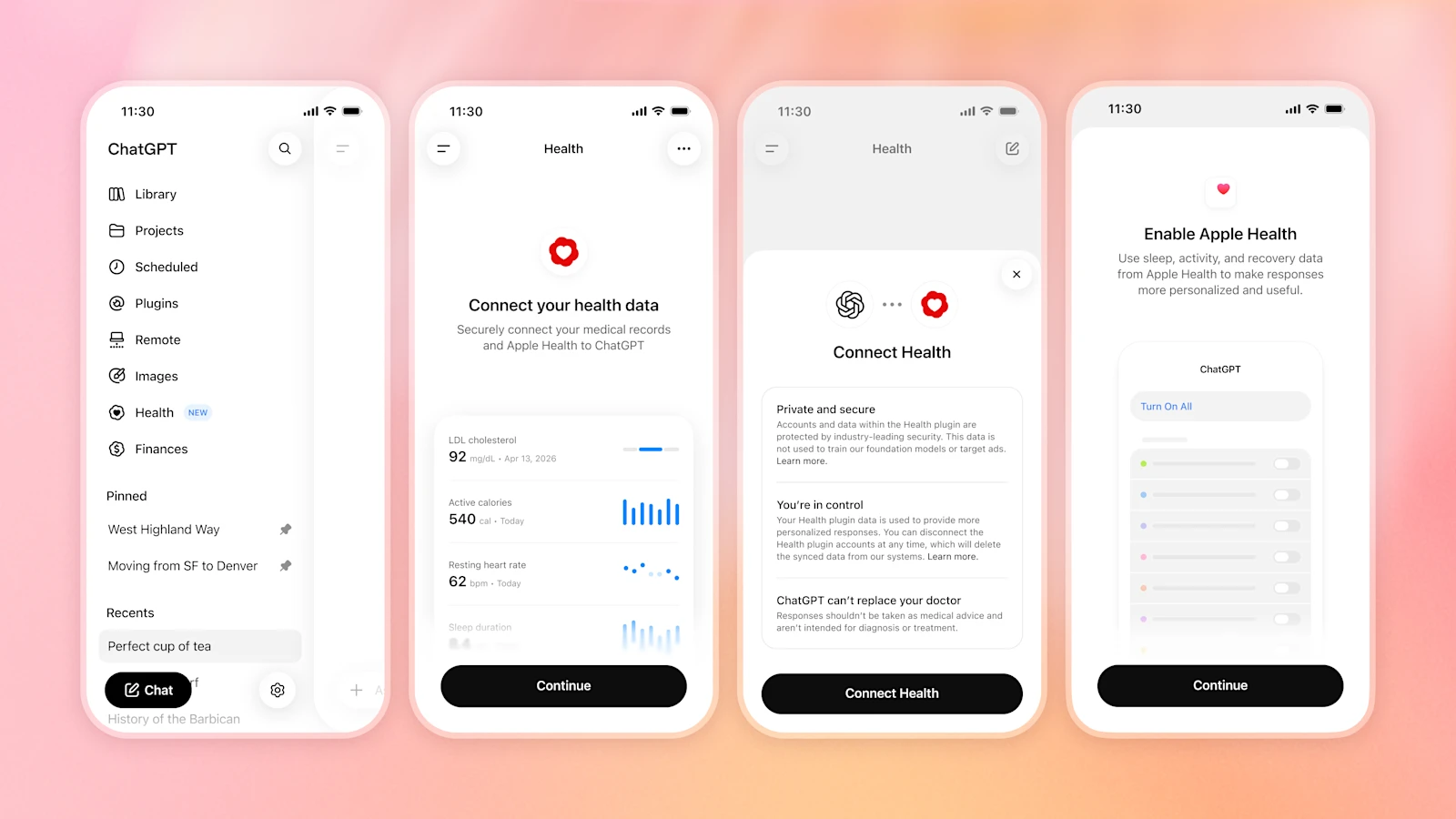
OpenAI has begun rolling out Health in ChatGPT to logged-in adults in the United States across its Free, Go, Plus and Pro plans. Announced on July 23, the update lets users connect Apple Health and supported medical records, then give ChatGPT permission to use that information in regular conversations. It works on web and iOS; records connect only to supported U.S. providers.
Earlier testing kept sensitive health context inside a dedicated area. OpenAI says more than 70 percent of health-related conversations nevertheless took place elsewhere in ChatGPT. The new design therefore allows connected data to inform other chats when relevant. A food allergy can shape a restaurant suggestion, while a history of lab results can support questions about changes between appointments. Users can approve access once or allow ongoing access.
Privacy is central because this may include medications, diagnoses, activity, sleep and clinical history. OpenAI says connected records, Apple Health data and conversations that use them are not used to train its foundation models or target advertisements. The information receives additional encryption, and permission is requested by default before it is used. Disconnecting an account deletes synced data from OpenAI’s systems within 30 days, although information already included in saved chats remains until those conversations are deleted. Memories may be created from Health conversations, but not directly from connected records.
The company says more than 300 million people ask ChatGPT health questions each week. Free users receive GPT-5.5 Instant for these conversations, while paid users can use GPT-5.6 Sol. OpenAI worked with hundreds of physicians on evaluations and testing, but also stresses that ChatGPT can make mistakes and does not replace professional care. Users should therefore verify important information and discuss medical decisions with a qualified clinician.
The launch matters because it moves a general AI assistant closer to becoming a persistent interface for highly personal data. For users, that may reduce repeated uploads and make scattered records easier to understand. It also creates a serious decision about how much context to connect and retain. For AI makers and businesses, the product shows that model quality alone is no longer enough: permissions, encryption, deletion controls and safe data sharing increasingly determine whether people will trust an assistant. The rollout is U.S.-only, so Dutch and other European users do not receive immediate access, but it signals where competition in personal AI is heading.